Mobile App Development Manchester: A Strategic Guide for 2026

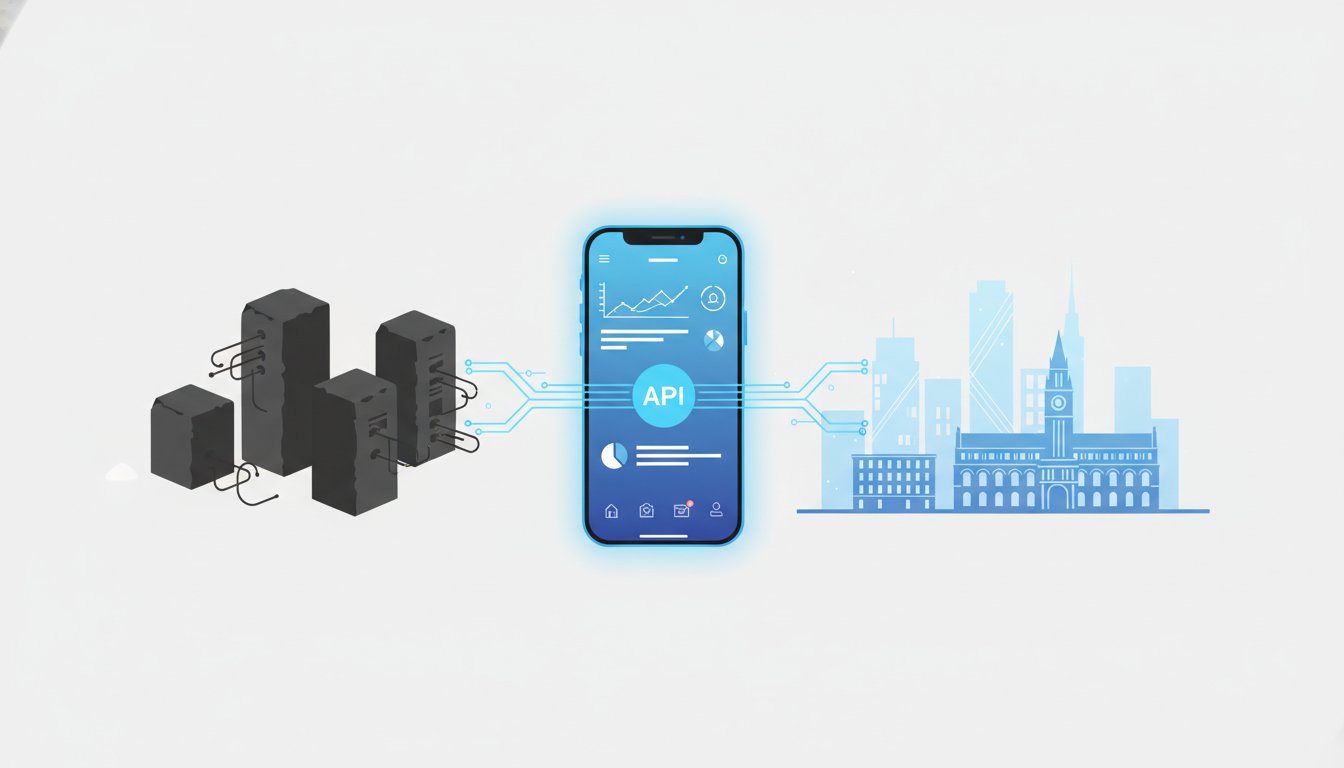
With mobile commerce now accounting for 73% of all UK retail transactions, the pressure on your digital infrastructure has never been higher. Many UK business leaders find themselves trapped between rising maintenance costs and fragmented legacy systems that refuse to integrate with modern mobile interfaces. If you're researching mobile app development manchester, you likely recognize that a basic storefront app no longer suffices. You need a robust solution that bridges the gap between your established business logic and a high performance user experience.
We understand that deciding between native and cross-platform frameworks often feels like a high stakes gamble with your future technical debt. This guide provides a comprehensive strategic framework for 2026 to help you navigate bespoke development with clarity. We'll examine how to select the optimal tech stack, the critical role of API first architecture, and the precise steps required to modernize legacy code into a scalable, secure foundation. You will gain a clear roadmap for building a mobile application that functions as a sophisticated, long term asset for your organization's growth.
Manchester has solidified its position as a primary engine of the UK digital economy, with tech businesses now contributing £30 billion to the regional economy annually. This growth has shifted the conversation around mobile app development manchester from simple, standalone products to the creation of complex, integrated digital ecosystems. In 2026, a mobile application is rarely just a tool for customer engagement. Instead, it serves as the primary interface for critical business data, bridging the gap between field operations and deep-seated legacy infrastructure.
The UK market has matured beyond the allure of low-cost offshoring. Business leaders have seen the high maintenance costs and technical debt associated with poorly architected code. There is a decisive move toward high-authority technical partners who offer structural integrity and accountability. The Evolution of Mobile App Development has reached a stage where bespoke builds are the only viable path for long-term ROI. Off-the-shelf templates fail to provide the fluid transitions and secure API integrations required to handle the £28.3 billion UK mobile app market effectively.
Mobile commerce now accounts for 73% of all retail transactions in the UK. This dominance has turned "mobile-first" from a design preference into a fundamental requirement for digital transformation. Users in 2026 demand more than basic utility; they expect speed, sophisticated offline functionality, and AI-driven interfaces that anticipate their needs. We are seeing a surge in on-device machine learning, where frameworks like Apple's Core ML process data locally to ensure privacy and performance. For Manchester firms, this means building apps that aren't just "present" on a device but are deeply embedded in the user's daily workflow through personalized, data-rich journeys.
While physical proximity was once a deciding factor, the rise of sophisticated remote collaboration tools has standardized high-performance development across the UK. Modern business leaders prioritize technical depth over a local postcode. Choosing a specialized laravel development agency ensures your mobile application is supported by a robust, enterprise-grade backend. This technical authority is vital when your mobile app development manchester project involves sensitive data or complex logic. A partner with national expertise understands UK GDPR and the Data Protection Act 2018 with a level of precision that generalist local shops often lack. The focus has shifted from "who is closest" to "who can build a system that performs perfectly under pressure."
Ultimately, the role of a mobile app has changed. It's no longer an optional add-on but the central hub for modern business logic. By prioritizing bespoke architecture and deep technical expertise, UK organizations can ensure their mobile assets remain scalable, secure, and ready for the future demands of 2026 and beyond.
Choosing between native and cross-platform architecture is the most significant technical hurdle in mobile app development manchester. This decision dictates your long-term maintenance overhead and your ability to scale as user demands evolve. Aligning your choice with the UK's Digital Development Strategy ensures your infrastructure supports national goals for digital inclusion and high-performance connectivity. A well-chosen stack serves as a foundational asset, while a poor choice can lead to a "Legacy Wall" that prevents future innovation.
Native development uses Swift for iOS and Kotlin for Android, giving developers direct access to the device's underlying hardware. In contrast, cross-platform frameworks like React Native or Flutter allow for a unified codebase. Industry data indicates that cross-platform approaches can offer a 30% to 40% cost saving compared to building two separate native apps. However, the decision shouldn't rest on initial outlay alone. You must evaluate whether the "platform-native" feel is achievable for your specific use case or if performance bottlenecks will emerge as your user base grows.
Native builds remain the gold standard for applications requiring high-end graphics, complex biometric integrations, or specialized camera APIs. In sectors like fintech, where security and speed are paramount, native code ensures the application performs perfectly under pressure. These codebases offer superior long-term stability. Because they don't rely on third-party bridge layers, you can adopt new OS features the day they are released. This is vital for mission-critical systems that can't afford to wait for framework maintainers to update their libraries. If your roadmap includes deep hardware-level integrations like haptic feedback or offline data processing, native is the non-negotiable standard.
Cross-platform development is often the strategic choice for businesses prioritizing rapid deployment and synchronized feature updates. By using a single codebase, you eliminate the risk of one platform lagging behind the other. This efficiency extends to your mobile app development manchester strategy, allowing you to allocate resources toward refining user journeys rather than managing two distinct technical stacks. Modern frameworks have significantly improved their ability to handle seamless API integration, making them a powerful tool for organizations that need to connect mobile interfaces to complex business logic. If you're unsure which path fits your specific infrastructure, exploring cross-platform mobile development with a specialist partner can clarify the ROI of each approach.
Ultimately, the choice depends on your specific performance requirements and the complexity of your existing systems. While cross-platform offers speed, native offers depth. Both require a disciplined approach to architecture to ensure the resulting application is secure, scalable, and capable of delivering measurable business returns.
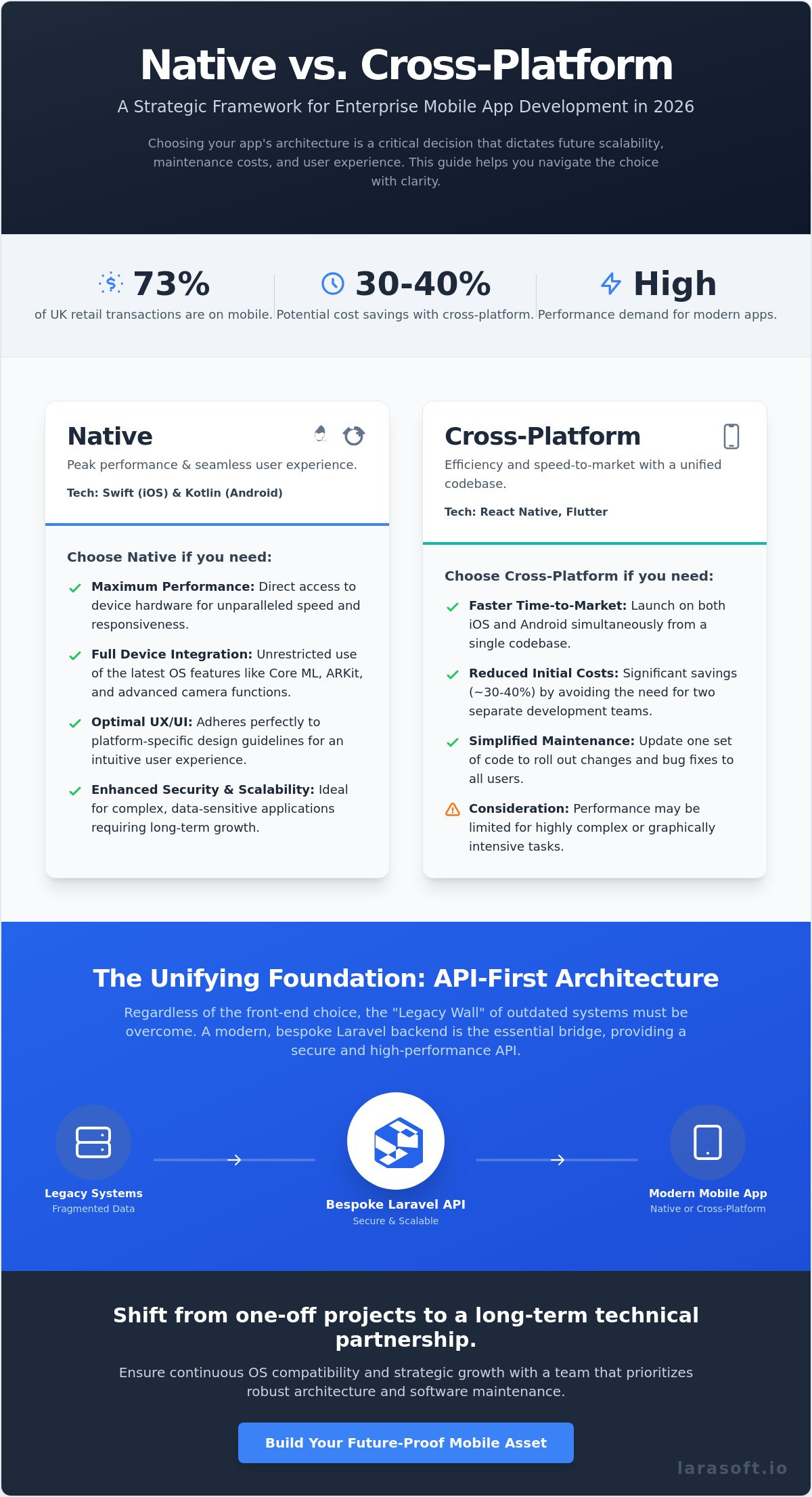
A common pitfall in mobile app development manchester is over-prioritising the visual interface while neglecting the architectural engine that powers it. Users only see the frontend, but the backend architecture determines whether the application can handle high-concurrency environments or if it'll buckle under pressure. For UK enterprises, an API-first approach using Laravel has emerged as the gold standard for creating fluid, responsive, and secure mobile experiences.
The strength of Manchester as a digital leader is reinforced by the UK government's Manchester Digital Campus initiative, which signals a long-term commitment to high-level technical infrastructure. Aligning your mobile strategy with this level of structural integrity requires a backend framework that offers more than just basic connectivity. Laravel provides a sophisticated toolkit for building robust APIs that act as the unsung hero of your digital ecosystem, ensuring your mobile app remains a foundational asset rather than a technical liability.
Laravel excels in managing the complex data exchanges required for modern mobile apps. It handles thousands of concurrent requests with ease, providing the scalability necessary for growing businesses. Developer efficiency is another critical factor. Laravel’s expressive syntax and built-in tools like Eloquent ORM and Sanctum for authentication significantly speed up the API development lifecycle. More importantly, it includes native protection against common vulnerabilities such as SQL injection and cross-site request forgery. This ensures your mobile app development manchester project is secure by design from the first line of code.
For most UK business leaders, a mobile app doesn't exist in a vacuum. It must connect seamlessly with existing CRMs, ERPs, and third-party services to deliver real-time value. This level of interoperability requires high-availability RESTful or GraphQL APIs that maintain data integrity across all platforms. Whether you're pulling inventory levels from a legacy system or pushing customer interactions to a marketing suite, the backend must ensure every transaction is accurate and secure. By focusing on API-first architecture, we transform mobile interfaces into powerful conduits for existing business logic, facilitating a unified digital strategy that scales effortlessly.
Building a high-performance app requires more than just a great idea; it requires a disciplined technical foundation. By leveraging Laravel for your API layer, you create a system that is not only fast and secure today but is also prepared for the technological shifts of tomorrow.
The "Legacy Wall" represents the single greatest barrier to mobile innovation for established UK firms. Many organizations find that their core business logic is trapped within monolithic codebases that were never designed for the asynchronous, high-speed requirements of modern smartphones. Attempting to build a sleek frontend on top of a fragmented, outdated backend often leads to sluggish performance and high maintenance costs. Strategic legacy code modernisation serves as the essential precursor to any successful strategy for mobile app development manchester. It's about transforming a technical liability into a foundational asset.
When planning your mobile app development manchester, you must decide between an incremental migration and a "Big Bang" rewrite. While a complete rewrite seems appealing, it often carries unacceptable risks for mission-critical systems. We typically recommend wrapping legacy logic in modern APIs. This approach allows your new mobile app to consume data immediately while you gradually refactor the underlying code in a controlled, manageable journey toward a modern architecture.
A thorough audit is the first step in dismantling the Legacy Wall. You need to identify security risks that could violate the Data Protection Act 2018 or UK GDPR, especially when exposing internal data to mobile endpoints. Performance bottlenecks in old databases often become glaringly obvious when thousands of mobile users request data concurrently. The business cost of maintaining these systems is often invisible but substantial. Modernising your infrastructure isn't just a technical upgrade; it's a strategic move to improve your long-term ROI and prepare your data for a mobile-first user experience.
Preparing your infrastructure for mobile access requires a structured, three-step approach to ensure stability and performance:
If you're struggling with outdated systems that prevent innovation, our specialized legacy code modernisation services can help you build the robust foundation your mobile strategy requires.
Successful mobile app development manchester is never a one-off transaction. In the high-velocity digital economy of 2026, launching an application is simply the first milestone in a long-term technical journey. A mobile asset requires continuous refinement to remain secure, performant, and aligned with shifting user expectations. Business leaders who treat development as a singular project often find themselves with "zombie apps" that fail to support new OS features or succumb to security vulnerabilities within months of release. We view ourselves as your dedicated technical ally, ensuring that your digital infrastructure evolves alongside your commercial goals.
Our role as technical artisans goes beyond writing clean code. We focus on the longevity and scalability of your systems, framing every technical intervention as a foundational asset for your future. This involves a disciplined approach where complex development processes are managed through a structured roadmap, providing you with the reassurance that your investment is protected against obsolescence. When you choose a partner, you aren't just buying a product; you're securing a commitment to high-quality execution and structural integrity.
Dedicated software maintenance is the primary driver of long-term user retention. Every year, Apple and Google release significant updates to iOS and Android that can introduce breaking changes to existing applications. Staying ahead of these version updates is critical to prevent app crashes and maintain a seamless user experience. Beyond compatibility, maintenance includes proactive security patching and continuous performance monitoring. By identifying and resolving bottlenecks before they impact the user, we ensure your application performs perfectly under pressure. This disciplined upkeep is essential for complying with evolving UK data regulations, such as the Age Appropriate Design Code and the Data Protection Act 2018.
An exceptional app provides no value if your target audience cannot find it. Your mobile strategy must be tightly integrated with your broader seo services to drive organic growth and technical visibility. This includes implementing deep-linking strategies that connect your web presence directly to specific in-app content, improving both search rankings and user conversion rates. For web-app hybrids, technical SEO ensures that your platform is discoverable across all digital touchpoints. By aligning App Store Optimisation (ASO) with your primary search goals, we create a unified funnel that captures high-value users and directs them into your mobile ecosystem.
Building a scalable, secure, and high-performance mobile application requires more than just technical skill. It requires a partner who understands the practical realities of business returns and the necessity of meticulous execution. If you're ready to build a foundational asset for your organization, partner with Larasoft for your next mobile project and experience a development cycle designed for growth.
Navigating the complexities of mobile app development manchester requires a shift from viewing software as a one-off purchase to treating it as a foundational business asset. We've established that high-performance mobile experiences depend on robust API-first architecture and the strategic modernisation of legacy systems. By choosing a specialized tech stack like Laravel, React, or Vue.js, you ensure your infrastructure remains resilient against the rapid technological shifts expected in the coming years.
Larasoft was founded in 2018 with a singular focus on delivering bespoke UK builds that solve deep technical challenges. Our dedicated UK-based team of technical artisans takes pride in creating systems that perform perfectly under pressure, bridging the gap between complex business logic and seamless user interfaces. We don't just build apps; we architect long-term solutions that drive measurable growth. Our expertise in Laravel and modern frontend frameworks ensures your application is secure, scalable, and ready for the future.
Ready to transform your legacy infrastructure into a modern mobile powerhouse? Discuss Your Mobile Strategy with Larasoft today. Let's build a digital ecosystem that scales with your ambition.
Bespoke mobile app development costs in the UK are determined by the complexity of features and the technical depth required. While freelance rates in Manchester sit between £30 and £50 per hour, established agencies typically charge between £70 and £120 per hour. These rates are often 15% to 20% lower than comparable services in London, making mobile app development manchester a cost-effective choice for enterprise-grade quality without capital city premiums.
You should choose native development for high-end graphics or deep hardware integration, while cross-platform is ideal for rapid market entry. Frameworks like React Native can reduce initial development costs by 30% to 40% through a shared codebase. If your application requires mission-critical stability and immediate access to new OS features, native Swift or Kotlin remains the standard. We help you evaluate these trade-offs based on your specific scalability goals.
The lifecycle of a bespoke mobile application usually spans four to nine months. This timeline includes a discovery phase to define business logic, a development phase for frontend and backend architecture, and a rigorous testing period. Complex enterprise projects involving legacy integration may sit at the upper end of this range. We prioritize a structured, transparent process to ensure every milestone delivers measurable progress toward your final deployment.
We can integrate new mobile applications with existing legacy systems by utilizing an API-first architecture. This process involves wrapping your established business logic in a secure API layer, allowing modern mobile interfaces to consume data without disrupting your core operations. This approach dismantles the "Legacy Wall" and transforms outdated software into a foundational asset. It's a strategic way to modernize your infrastructure while delivering immediate value to mobile users.
Laravel is an excellent choice for a mobile backend because it provides a secure, scalable foundation for RESTful and GraphQL APIs. It features built-in protection against common vulnerabilities and handles thousands of concurrent requests with ease. For mobile app development manchester, using Laravel ensures your API layer is robust enough to support complex integrations with CRMs and ERPs while speeding up the overall development lifecycle through developer-friendly tools.
An app developer focuses on the immediate delivery of a functional product, whereas a strategic technical partner prioritizes the longevity and business impact of the software. We act as an invested ally, considering how the application fits into your wider digital ecosystem and long-term growth. This partnership includes proactive advice on technical debt, scalability, and how to maintain a competitive edge through continuous innovation rather than one-off code delivery.
We ensure security by implementing end-to-end encryption and adhering to the Data Protection Act 2018 and UK GDPR. Our development process includes creating Privacy Manifests for the App Store and fulfilling Google Play’s Data Safety requirements. We also follow the Age Appropriate Design Code for apps targeting younger audiences. By building with a privacy-first mindset, we protect your sensitive business data and ensure your application meets all modern regulatory standards.
Mobile apps require continuous maintenance to stay ahead of annual iOS and Android version updates that can cause app breakage. This includes proactive security patching, performance monitoring, and bug fixes to ensure long-term user retention. Without a dedicated maintenance plan, apps quickly become obsolete as hardware and operating systems evolve. We provide structured support to ensure your application remains a high-performing asset that functions perfectly under the pressure of real-world usage.
Here’s what we've been up to recently.
Certified Quality. Great Prices